Estradiol + Progesterone
Good for: Those experiencing vasomotor symptoms of perimenopause or menopause, such as hot flashes and night sweats.


Estradiol is the primary form of estrogen produced by the ovaries, and progesterone is the hormone that supports cycle regulation, sleep, and mood. Together, they form the foundation of hormone replacement therapy (HRT) for those navigating perimenopause or menopause, restoring the levels that decline with age.
As estrogen and progesterone levels fall during the menopausal transition, the hypothalamus and other tissues that depend on these hormones begin to signal their absence, causing hot flashes, sleep disruption, mood instability, and cognitive changes. Restoring physiologic levels through HRT directly addresses these symptoms by replenishing the hormones driving them.
Every batch of compounded medication is third-party tested before it ships. All testing follows USP 797 and the relevant USP chapter for each test. Your provider continues to monitor your treatment, so quality doesn't stop at the pharmacy door.
Explained by our providers
How estradiol and progesterone work together
Estradiol and progesterone decline during perimenopause and menopause, driving most of the symptoms: hot flashes, sleep disruption, mood instability, cognitive fog, and bone loss. HRT restores those levels, giving your body back the hormonal environment it was running on. Bioidentical versions are molecularly identical to what your body produced, so your receptors respond the same way.
What to expect on estradiol and progesterone
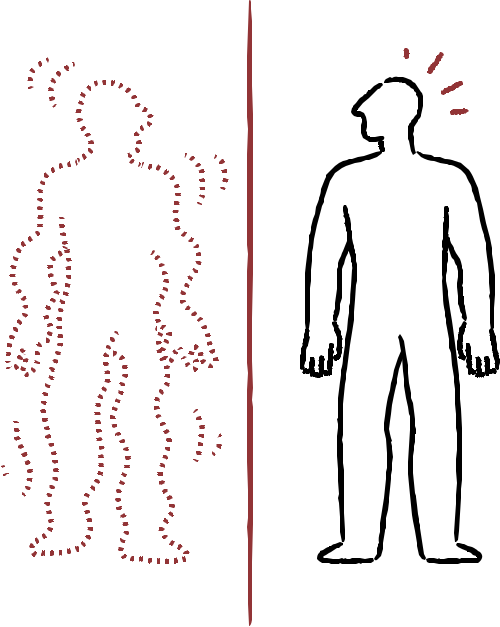
Most patients notice improvements in sleep and hot flashes within the first 2 to 4 weeks, with mood and energy following as levels stabilize. Early side effects like breast tenderness or mild bloating are common signals that the protocol needs refinement, not a reason to stop. Full symptom resolution can take 2 to 3 months, and your provider stays involved throughout.


Pay for medicine, not marketing
Not all medications are created equal. Our prescriptions are compounded in the U.S. through our pharmacy partner with decades of experience and strict quality controls.

Ingredient quality
Sterility
Endotoxin
Potency
Our pharmacy partner is:


Inclusive care. Exclusively Haven.
- Born out of a doctor’s office, not a tech company
- Virtual check-ins with board-certified medical providers
- Pay for actual treatment, not subscription fees

Pricing breakdown
This medication may require lab testing that can be completed at a Haven Health or 3rd-party lab location. Your provider will determine what's necessary based on your care plan.



Common questions
Bioidentical estradiol and progesterone have a strong safety record when prescribed appropriately and monitored over time. The evidence on HRT safety has evolved considerably in the past two decades, with current research supporting that the benefits of hormone therapy generally outweigh the risks for most people under 60 who are within 10 years of menopause onset. Your Haven provider reviews your personal health history and risk factors before prescribing and monitors your response regularly.
Delivery method and dosing schedule depend on your specific formulation. Topical estradiol is typically applied daily to the skin; oral progesterone is usually taken at night given its mild sedative properties. Vaginal formulations are applied as directed. Your provider will walk you through your specific protocol and adjust based on how you respond.
Many patients notice improvements in sleep and hot flash frequency within the first 2 to 4 weeks. Mood, energy, and cognitive clarity often follow over the subsequent weeks to months as hormone levels stabilize. Full symptom resolution can take 2 to 3 months in some cases. Your provider will check in on your response and adjust dosing as needed.
Common early side effects can include breast tenderness, mild bloating, or headaches as your body adjusts to restored hormone levels. These typically ease within the first few weeks. Progesterone may cause mild drowsiness when taken at night, which many patients find beneficial for sleep. Your provider will help distinguish between adjustment effects and signs that your dose needs refinement.
The evidence base for HRT has been substantially re-evaluated since the Women's Health Initiative, with subsequent analyses and newer studies showing that bioidentical hormone therapy, particularly when initiated early in the menopausal transition, is associated with reduced risk of cardiovascular disease, osteoporosis, and cognitive decline. The Menopause Society guidelines now support HRT as appropriate first-line therapy for menopausal symptoms in healthy individuals without contraindications.