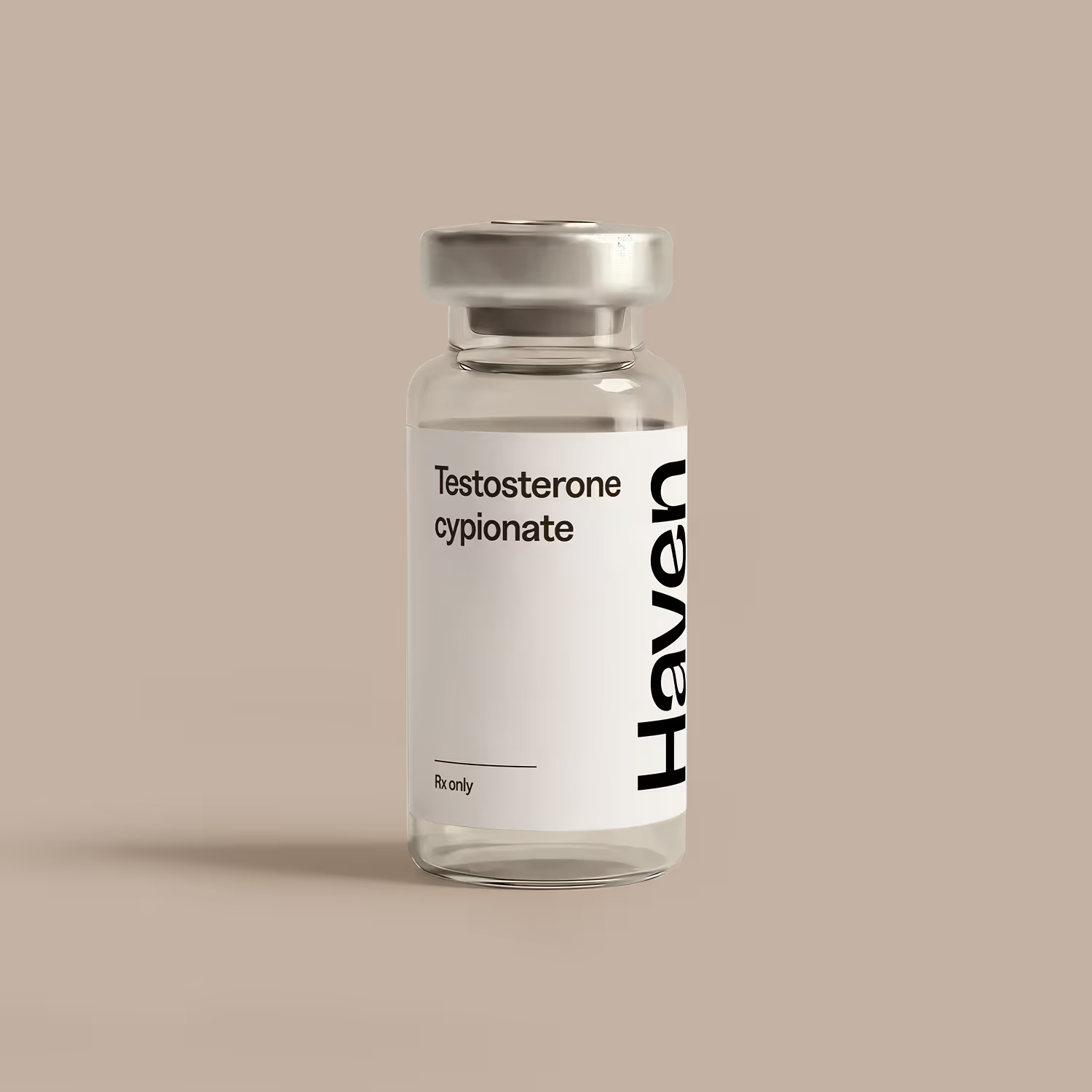
Testoterone Injectable
Good for: Those seeking a highly established, cost-effective, and clinically proven form of testosterone replacement, with precise control over dosing and the flexibility to administer at home.


Injectable testosterone cypionate is the most widely prescribed and clinically studied form of testosterone replacement therapy. Administered via subcutaneous or intramuscular injection, it delivers testosterone directly into the bloodstream for consistent, reliable absorption.
Testosterone cypionate is released gradually from the injection site into circulation, where it converts to active testosterone. This sustained release profile allows for stable hormone levels between doses. Restored testosterone supports muscle, libido, mood, energy, bone density, and cardiovascular health.
Every batch of compounded medication is third-party tested before it ships. All testing follows USP 797 and the relevant USP chapter for each test. Your provider continues to monitor your treatment, so quality doesn't stop at the pharmacy door.
Explained by our providers
How injectable testosterone works
Testosterone cypionate is injected directly into subcutaneous tissue or muscle, where it forms a depot that releases steadily into the bloodstream over days. This makes blood levels predictable and consistent when dosed on the right schedule, typically once or twice per week. It's one of the most well-studied medications in endocrinology, with decades of clinical data behind it.

What to expect on injectable testosterone
Energy and mood improvements are usually noticeable within 2 to 4 weeks, and body composition changes develop over 3 to 6 months. Common side effects include acne, mild oiliness, and injection site reactions, and your provider monitors your levels at regular intervals and uses that data to refine your dose and frequency over time. Most patients find the injection routine straightforward within the first few weeks.


Pay for medicine, not marketing
Not all medications are created equal. Our prescriptions are compounded in the U.S. through our pharmacy partner with decades of experience and strict quality controls.

Ingredient quality
Sterility
Endotoxin
Potency
Our pharmacy partner is:


Inclusive care. Exclusively Haven.
- Born out of a doctor’s office, not a tech company
- Virtual check-ins with board-certified medical providers
- Pay for actual treatment, not subscription fees

Pricing breakdown
This medication may require lab testing that can be completed at a Haven Health or 3rd-party lab location. Your provider will determine what's necessary based on your care plan.



Common questions
Injectable testosterone is one of the most extensively studied medications in endocrinology. When monitored appropriately, it is safe for the vast majority of patients. Your Haven provider tracks hematocrit, lipid panels, PSA where relevant, and hormone levels through scheduled lab work. Elevated hematocrit is the most common lab finding requiring dose adjustment and is manageable with proper monitoring.
Injectable testosterone is administered subcutaneously or intramuscularly, typically once or twice per week depending on your protocol. Your provider specifies injection sites, needle gauge, and volume. Most patients rotate between sites such as the outer thigh or glute. Supplies are included with your prescription and your provider walks you through the process.
Most patients notice improved energy and mood within 2 to 4 weeks. Libido improvements often follow shortly after. Body composition changes, including increased lean mass and reduced fat, develop over 3 to 6 months with consistent treatment. Your provider tracks your levels and adjusts your dose to keep you in a range that is both effective and sustainable.
Common side effects include acne, oilier skin, and mild injection site reactions such as temporary soreness or redness. Some patients experience elevated estradiol as testosterone aromatizes, which can cause mood changes, water retention, or breast tissue sensitivity. This is manageable with protocol adjustment or the addition of an aromatase inhibitor if indicated. Elevated hematocrit is monitored through labs.
Testosterone cypionate has a clinical evidence base spanning over 50 years. Numerous controlled trials and longitudinal studies have demonstrated their efficacy in improving testosterone levels, sexual function, mood, body composition, and bone density in hypogonadal patients. Current guidelines from endocrinology and urology societies support injectable testosterone as a first-line treatment option for clinically confirmed hypogonadism.